Halloween My First Trick or Treat SVG Review
As a designer who has spent years translating digital files into tangible thread and fabric, I approach every new asset with a mix of excitement and skepticism. The market is flooded with Halloween My First Trick or Treat SVG options, but not all of them translate well from the screen to the needle. When I first pulled up this specific design, my immediate reaction was to assess its potential for real-world application rather than just admiring the vector lines on my monitor. This piece falls squarely into the Crafts and Graphics categories, promising a funny, cute aesthetic for kids' Halloween gear. But does it hold up under the scrutiny of a professional embroidery workflow?
First Impressions: Mood and Visual Personality
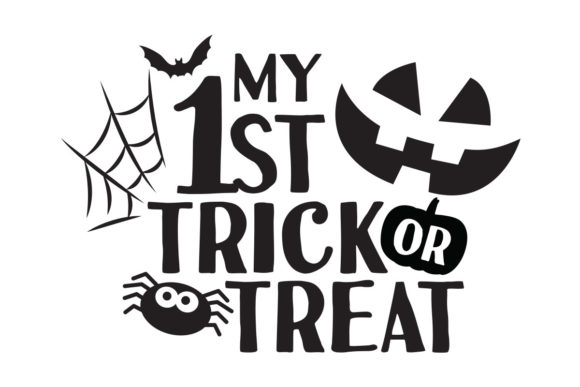
The initial visual impact of the Halloween My First Trick or Treat SVG is undeniably charming. It captures that specific, fleeting moment in a child's life—their very first encounter with the holiday magic. The layout is balanced, avoiding the cluttered feel that plagues many seasonal designs. From a design perspective, the typography appears playful without sacrificing legibility, which is crucial when working with text-heavy machine embroidery designs.
However, the transition from a digital file to a stitched reality requires careful consideration. The "funny cute" description suggests a whimsical style, likely relying on rounded edges and perhaps some decorative elements like pumpkins or ghosts. In an embroidery context, these shapes need to be robust enough to withstand the tension of the hoop and the friction of the needle. If the design relies too heavily on thin, delicate lines, it may result in gaps or breakage during stitching. For now, the visual personality feels right for a boutique product line or a personalized gift, provided the stitch conversion is handled correctly.
Real-World Application: From File to Finished Product
Let's imagine a practical scenario: I am preparing a custom embroidered sweatshirt for a client whose toddler is turning two this October. The goal is to create a high-quality, durable garment that will survive trick-or-treating and countless washes. Using the Halloween My First Trick or Treat SVG as the base, I need to visualize how the design sits on a curved chest area of a heavy cotton blend.
In this context, the design's scalability becomes paramount. If I were to use this as a tote bag design, the larger surface area would allow for more intricate details, perhaps utilizing a combination of fill stitch for the background shapes and satin stitch for the lettering to add texture and depth. Conversely, if I were creating a small embroidered patch to attach to a denim jacket, I would need to ensure the smallest details do not get lost. The stitch density must be managed carefully; too dense, and the fabric pucker; too loose, and the design looks unfinished.
For an Etsy seller or a small shop product owner, this design offers excellent potential for custom apparel. Parents love unique, age-specific items, and a "My First" theme is a perennial bestseller. The versatility of the design allows it to work on baby embroidery projects like onesies, as well as slightly older children's hoodies. However, success depends on how well the design adapts to different fabric textures. A smooth jersey knit will render the design differently than a textured fleece, so testing is non-negotiable.
Navigating Challenges: Fabric, Hoop Size, and Details
While the concept is sound, there are specific areas where the Halloween My First Trick or Treat SVG demands caution. One of the biggest pitfalls in seasonal embroidery is attempting to fit a complex design into a hoop size that is too small. If you try to shrink this design to fit a 4x4 inch hoop, the text may become illegible, and the decorative elements might merge into a muddy blob of thread.
Fabric choice is another critical factor. On dark fabrics, the contrast of thread colors becomes essential. You cannot simply rely on the default white outline often found in digital previews. You may need to adjust the running stitch borders or add a layer of underlay to make the design pop against black or navy backgrounds. Similarly, on stretchy fabrics like spandex blends, the design needs to be stabilized properly. Without the right stabilizer, the stitching can cause the fabric to warp, ruining the look of the finished product.
Another concern is the longevity of the design on items that require frequent washing, such as kitchen towels or aprons. While this design is marketed for various applications including mugs and cards, those are typically cut-and-sew or print projects. For true machine embroidery design, the durability of the stitches matters. Areas with tight corners or tiny lettering are prone to breaking over time. If you plan to sell these as holiday gifts, you want your customers to be able to wear them year after year without the design peeling away.
Practical Designer Notes for Success
- Test on Scrap Fabric: Never skip the test run. Stitch out the Halloween My First Trick or Treat SVG on a scrap piece of the actual fabric you intend to use. Check for puckering and thread breaks.
- Review Thread Contrast: Ensure the thread colors chosen provide enough contrast against the fabric. What looks good on a screen might disappear on charcoal gray.
- Check Stitch Density: Look at the converted embroidery file closely. Are there areas where the fill stitch is too dense? Adjust the settings to prevent stiffness.
- Confirm Hoop Size: Measure the bounding box of the design against your available hoops. Do not force a large design into a small space.
- Inspect Small Details: Zoom in on the text and small icons. If they are too fine, consider simplifying them or increasing the overall scale.
- Use Proper Stabilizer: Whether using tear-away, cut-away, or water-soluble stabilizer, choose the one that matches your fabric type to ensure a flat, professional finish.
- Licensing Check: Before selling any handmade product or digital product, confirm the licensing terms of the embroidery file. Does the license allow for commercial use of finished goods?
Impact on Brand and Customer Trust
Ultimately, the value of a design like Halloween My First Trick or Treat SVG lies in its ability to elevate your brand. A well-executed embroidery project signals quality to your customers. When a parent sees a crisp, clean stitch job on a child's shirt, they associate that professionalism with your entire shop. Conversely, a poorly executed design with tangled threads or misaligned letters can damage your reputation.
For commercial embroidery clients, consistency is key. If you are producing a batch of small shop merchandise, every item must look identical. This means the design assets must be reliable. The Halloween My First Trick or Treat SVG provides a solid foundation, but it is up to the designer to execute it flawlessly. By paying attention to the nuances of applique design techniques, stitch types, and fabric preparation, you can turn a simple graphic into a premium product.
In conclusion, while this design is not perfect for every single scenario, it holds significant promise for the right maker. It fits naturally into the narrative of a family-focused craft business. With careful planning, proper stabilization, and a keen eye for detail, this Halloween My First Trick or Treat SVG can become a standout item in your autumn collection, bringing joy to families and adding value to your portfolio.