Funny Design for Day Labors Sublimation Review
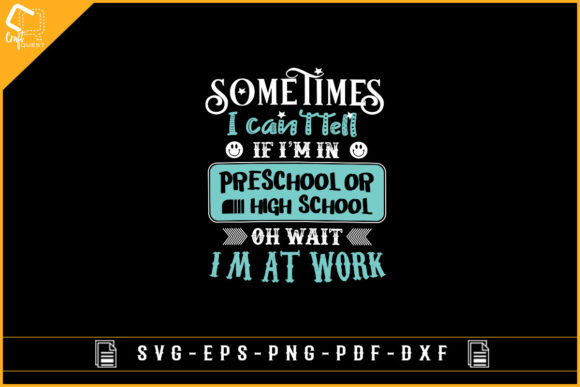
As a designer who has spent years navigating the intersection of digital graphics and physical textiles, I approach every new asset with a critical eye. When I first opened the files for Funny Design for Day Labors Sublimation, my immediate reaction was one of amusement followed by a quick mental assessment of its practical application. The text reads, "SOMETIMES I CAN’T TELL IF I’M IN PRESCHOOL OR HIGH SCHOOL OH WAIT I’M AT WORK," which instantly sets a relatable, humorous tone. However, translating this witty sentiment into a high-quality finished product requires more than just downloading an SVG or PNG file; it demands a strategic understanding of how the design interacts with fabric, thread, and the end-user.
First Impressions: Mood and Visual Personality
The visual personality of this Graphics asset is bold and straightforward. It relies heavily on typography to convey its message, making the legibility of the text the single most important factor in its success. In the context of Crafts, humor often wins over customers because it creates an emotional connection. This specific design targets the universal feeling of being overwhelmed at work, a sentiment that resonates deeply with teachers, office workers, and day laborers alike. The layout appears designed for impact, likely utilizing a stacked format to fit various garment sizes. For an Etsy seller or small shop owner, this kind of design is a goldmine for creating personalized gifts that feel authentic rather than mass-produced.
However, as I prepared to visualize this as a machine embroidery design, I noted that the density of the text could be a challenge. Unlike a simple logo, this phrase contains multiple clauses and words that need to flow naturally across the chest or back of a garment. If the lettering is too tight, the stitch density might become problematic, leading to puckering on lighter fabrics. Conversely, if the letters are too spaced out, the design may lose its punch. The key lies in finding the right balance where the fill stitch is dense enough to cover the background but loose enough to allow the fabric to breathe.
Real-World Application: From Digital File to Stitched Reality
Let’s imagine a real-life scenario: I am preparing a custom embroidered tote bag for a local craft fair. The client wants something funny to sell to teachers returning to school. I load the Funny Design for Day Labors Sublimation file into my digitizing software. My first step is always to check the hoop size. Because the text is long, a standard 4x4 hoop might not suffice without splitting the design, which can ruin the alignment. A larger 5x7 or 6x10 hoop is likely necessary to keep the phrase intact in one go.
When considering custom apparel like sweatshirts, the texture of the fleece becomes a major factor. Fleece tends to stretch, and if the stabilizer isn't chosen correctly, the heavy fill stitch required for these block letters will cause the fabric to pucker around the edges. I would recommend using a cutaway stabilizer for sweatshirt embroidery to provide the necessary support. The contrast between the bright thread colors and the dark grey or navy fabric of the sweatshirt will make the white or neon text pop, enhancing the visual appeal and ensuring the joke is readable from a distance.
This design also translates well to embroidered patches. Creating a patch allows for a higher level of detail and durability. The edges can be finished with a satin stitch border, adding a professional touch that elevates the perceived value of the item. These patches can then be sewn onto denim jackets, backpacks, or even caps. For a small business merchandise line, offering this design as both a direct-to-garment print and an embroidered patch gives customers variety while maximizing the utility of the digital asset.
Navigating Challenges: Where Caution is Required
While the design is versatile, there are specific situations where Funny Design for Day Labors Sublimation should be used with caution. First, avoid using it on thin or highly textured fabrics like linen or lightweight cotton blends unless you use a very light running stitch or reduce the stitch count significantly. Heavy embroidery on thin fabric can distort the material, making the shirt uncomfortable to wear.
Secondly, consider the placement on curved surfaces like caps. Embroidering long lines of text on a curved cap panel is notoriously difficult. The tension changes as the needle moves along the curve, often resulting in skipped stitches or uneven lettering. If you choose to put this design on a hat, ensure your machine is set up specifically for cap embroidery, or consider placing it flat on the front panel before sewing the brim.
Another area of concern is the frequency of washing. Items like kitchen towels or aprons are washed often. If the thread colors are not colorfast or if the stitch density is too low, the design may fray or fade after several washes. Always test the design on scrap fabric that matches your final product's weight and texture. Wash the test piece multiple times to ensure the handmade product holds up to real-world use. This step is crucial for maintaining customer trust and avoiding returns.
Strategic Notes for Designers and Business Owners
For those looking to integrate this into their commercial embroidery workflow, here are a few practical notes. Before committing to a full production run, create a printable mockup in black and white to assess the contrast and spacing. Sometimes, what looks good in color on a screen loses its definition when stitched in a single thread color. Check the digital embroidery file for any stray nodes or unnecessary jump stitches that could add time to the stitching process without adding value.
Licensing is another critical component. While the product description mentions it is ready to print, always confirm the terms regarding selling finished items versus reselling the digital files. As a responsible Etsy seller, you must ensure you have the rights to sell products made with this design. If the license restricts commercial use, you may only be able to use it for personal projects or limited-run handmade gifts.
Finally, think about the target audience. This design fits perfectly within the holiday embroidery category for back-to-school gifts or teacher appreciation weeks. It also works well for Father's Day or birthdays for anyone with a sarcastic sense of humor. By pairing the design with the right product—such as a sturdy canvas tote bag or a cozy hoodie—you increase the likelihood of a successful sale. The combination of a relatable message and high-quality execution is what turns a simple graphic into a beloved finished product.
Final Verdict on Craft Utility
In conclusion, Funny Design for Day Labors Sublimation offers a strong foundation for a variety of Crafts and Graphics projects. Its success depends entirely on the execution. With proper attention to hoop size, stabilizer choice, and fabric selection, this design can become a standout item in any craft business catalog. It captures the mood of the modern workforce with wit and style. Whether you are a hobbyist making gifts for friends or a professional decorator fulfilling a large order, taking the time to test and refine the embroidery settings will ensure that the final result is as durable and amusing as the original concept intended. Remember, the best designs are not just downloaded; they are thoughtfully adapted to the medium.